
TRAUMA-INFORMED COACHING (TICC)

WHY TICC?
Because mental health is the elephant in the room when working with any individual, team, or organization.
How we think, communicate, make decisions, handle stress, build relationships, lead, work, and change is influenced by what we carry with us.
A trauma-informed lens doesn't mean assuming everything is trauma. In fact, the distinction matters.
TRAUMA, STRESS & CO-OCCURRING CHALLENGES
It's important to differentiate between trauma, high stress, and the challenges that can occur alongside them.
Trauma is generally understood across four categories:
Acute. Chronic. Complex. Intergenerational — sometimes described as blood memory.
Trauma can also coexist with anxiety, addiction, behavioral patterns, relationship challenges, and difficulties with nervous-system regulation [explore photography to train and inspire your nervous system].
A trauma-informed lens can be valuable when working through individual or organizational challenges. It doesn't mean diagnosing people or defining them by what has happened to them. It means recognizing that our experiences can affect how we respond, relate, make decisions, and change.

I DON'T ASSUME I KNOW THE ENVIRONMENT IN WHICH YOU WORK BEST.
At its core, good coaching is about meeting people where they are.
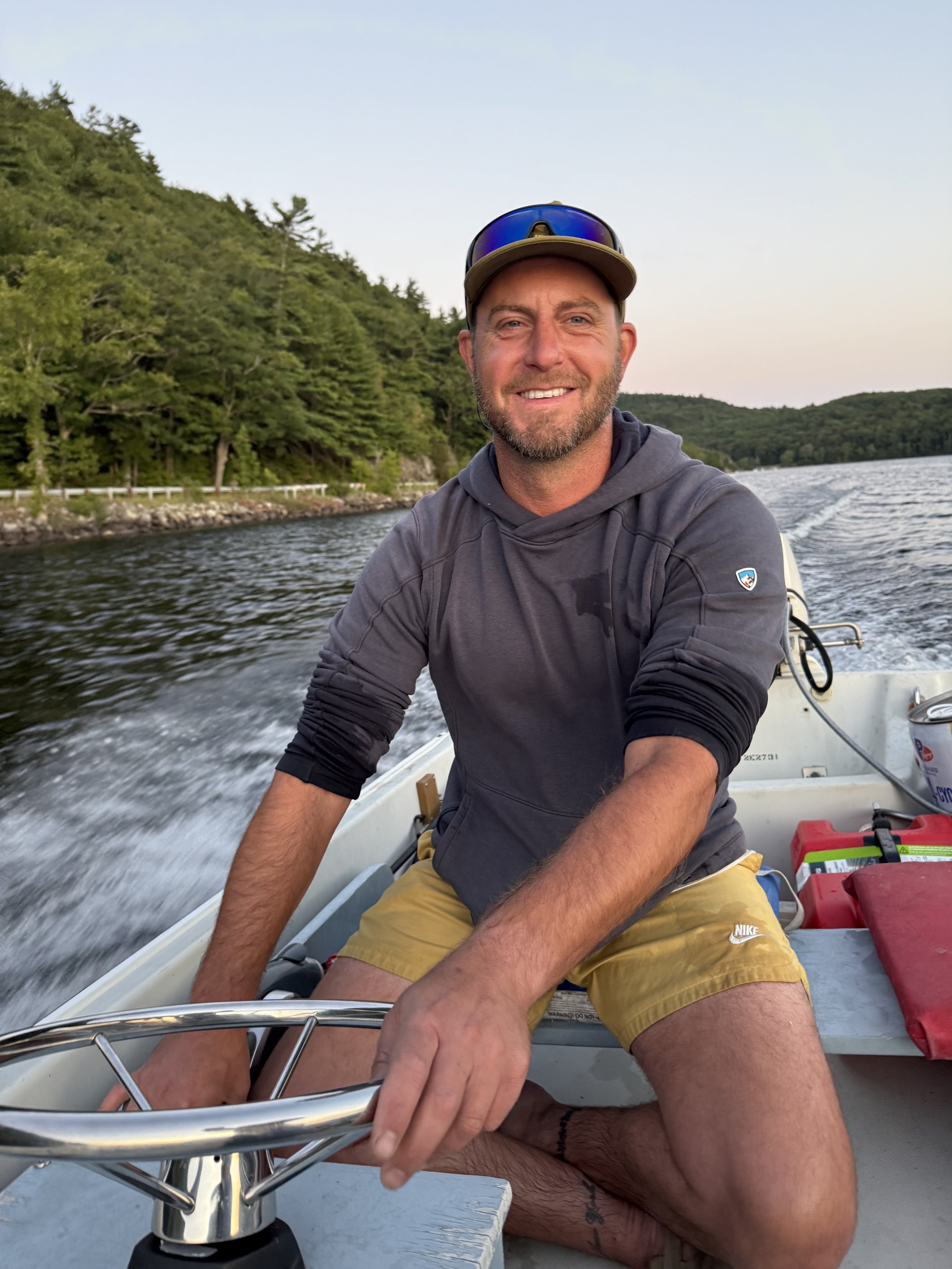
That might be in my office, at your house, or on Zoom. It might be on a boat, a trail, in a car, riding a bike, shooting hoops, building something, or somewhere else entirely.
And environment isn't only physical. A movie, a show, lyrics to a song, a game, a piece of art, or something you're working on can be as useful a place to start as a conversation.
Meet you where you are. Work from there.
WHAT IS A COACH?
A thinking partner focused primarily on the now, near, and future, while holding space for the past when it provides insight for moving forward.
Coaching isn't about telling someone what to do. It's a partnership designed to foster your own insight, agency, and capacity to make meaningful change.
The #1 reason for change is choice.

RELEVANT CREDENTIALS
Certified Trauma-Informed Coach (CTIC)
Training in trauma, nervous-system regulation, behavior, recovery, and post-traumatic growth.
B.S. Organizational Studies · University of Michigan
Human behavior, leadership, teams, organizations, decision-making, and change.
Health Sciences · University of Maine
Coursework in Anatomy & Physiology, Human Development, Human Nutrition, and Chemistry for Life Sciences.
Wilderness First Responder · U.S. Coast Guard Licensed Captain
Training and experience supporting work in outdoor, experiential, and maritime settings.
THE PRACTICE
Dialogue? Projects provides confidential, trauma-informed coaching grounded in curiosity before judgment and analysis before certainty.
The practice is informed by the ICF Code of Ethics and works alongside healthcare practitioners when needs extend beyond the scope of coaching.
Sessions are available in person, virtually, and in other environments appropriate to the individual and the work.